

Jaw fractures in dogs are a serious injury that requires immediate veterinary attention. Whether caused by trauma, severe dental disease, or an accident, a fractured jaw can be painful, interfere with eating and drinking, and significantly affect a dog’s quality of life.
If you suspect your dog has suffered a jaw fracture, prompt evaluation by a board-certified veterinary dentist and oral surgeon is critical. At Raintree Dentistry & Oral Surgery for Animals in Scottsdale, our team of board-certified veterinary dentists and oral surgeons specializes in diagnosing and treating complex oral and maxillofacial injuries, including jaw fractures in dogs.
What Causes Jaw Fractures in Dogs?
There are several common causes of a jaw fracture in dogs.
Trauma
Traumatic injuries are among the most frequent causes. Examples include:
- Being hit by a vehicle
- Falls from heights
- Dog fights
- Blunt-force injuries
- Accidents during play or outdoor activities
These injuries can result in fractures of the mandible (lower jaw) or maxilla (upper jaw).

Severe Periodontal Disease
Many pet owners are surprised to learn that advanced dental disease can cause a jaw fracture in dogs.
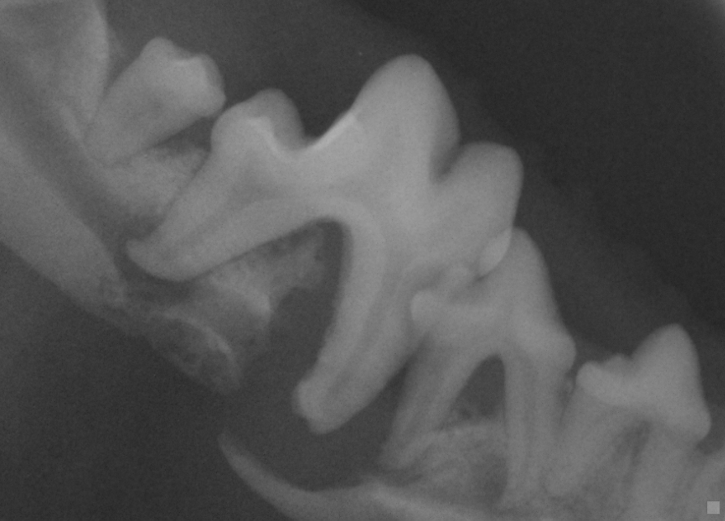
Chronic periodontal disease destroys the bone supporting the teeth. Over time, the jawbone can become so weakened that it fractures during normal activities such as eating or playing. These are known as pathologic jaw fractures and are commonly seen in small-breed and senior dogs.
A board-certified veterinary dentist and oral surgeon is uniquely trained to diagnose and treat these complex cases.
Signs of a Jaw Fracture in Dogs
Symptoms can vary depending on the location and severity of the fracture.
Common signs include:
- Extreme pain
- Difficulty eating or drinking
- Dropping food from the mouth
- Swelling of the face or jaw
- Crying out when opening the mouth
- Excessive drooling
- Bleeding from the mouth
- Misalignment of the teeth
- Inability to close the mouth normally
- Visible instability of the jaw
Some dogs may also become withdrawn or reluctant to interact because of pain.
Any dog displaying these signs should be examined as soon as possible by a board-certified veterinary dentist and oral surgeon.
Why Jaw Fractures Require Specialized Care
The mouth is one of the most challenging areas of the body to repair. Successful treatment requires restoring both bone alignment and normal dental occlusion (how the teeth fit together).
Improper treatment can lead to:
- Severe and chronic pain
- Difficulty eating
- Malocclusion (abnormal bite)
- Delayed healing
- Permanent dysfunction
Because of these complexities, a board-certified veterinary dentist and oral surgeon is often the most qualified specialist to manage a jaw fracture in dogs.
At Raintree Dentistry & Oral Surgery for Animals, we use advanced imaging, including dental radiography and cone-beam CT, to fully evaluate oral and maxillofacial injuries before treatment.
How Are Jaw Fractures Treated?
Treatment depends on the location and severity of the fracture.
Options may include:
- Interdental wiring
- Composite splinting
- Titanium plate fixation
- Tooth extraction when necessary
- Management of associated soft tissue injuries
The goal is always to restore normal function while minimizing discomfort and preserving as much healthy tissue as possible.
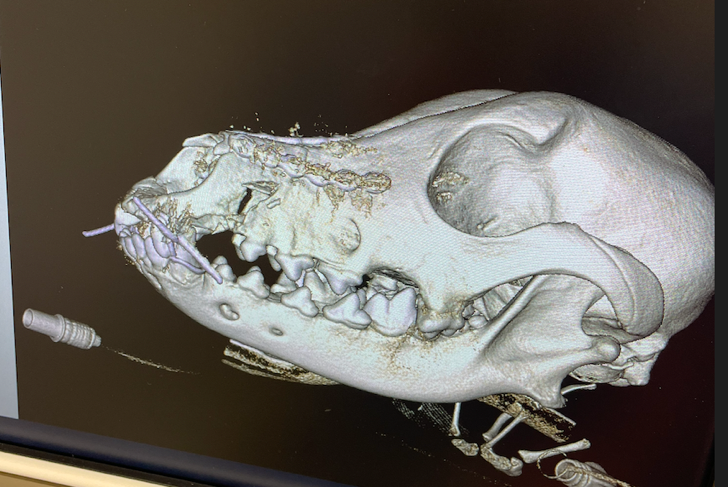


The board-certified veterinary dentists and oral surgeons at Raintree Dentistry & Oral Surgery for Animals have extensive training in advanced oral and maxillofacial surgery, allowing us to manage even complex fracture cases.
Recovery After Jaw Fracture Repair
Most dogs recover well following fracture repair when appropriate treatment is provided.
Recovery typically involves:
- Pain management
- Soft-food diets
- Activity restriction
- Follow-up examinations and imaging
Many patients return to normal eating and activity once healing is complete.
Early intervention by a board-certified veterinary dentist and oral surgeon often improves outcomes and reduces the risk of complications.
Why Choose Raintree Dentistry & Oral Surgery for Animals?
A jaw fracture in dogs is not a routine dental problem. It is a complex oral and maxillofacial injury that requires specialized expertise.
At Raintree Dentistry & Oral Surgery for Animals, our team of board-certified veterinary dentists and oral surgeons focuses exclusively on veterinary dentistry and oral surgery. This advanced training allows us to provide the highest level of care available for dogs suffering from jaw fractures and other serious oral injuries.
Our practice is equipped with advanced diagnostic imaging, specialized surgical equipment, and extensive experience treating traumatic and pathologic jaw fractures.
The Bottom Line
A jaw fracture in dogs should always be considered a dental and medical emergency. Prompt diagnosis and treatment can relieve pain, restore function, and significantly improve your dog’s quality of life.
If your dog has suffered facial trauma or is showing signs of a fractured jaw, contact Raintree Dentistry & Oral Surgery for Animals immediately. Our team of board-certified veterinary dentists and oral surgeons is dedicated to providing expert emergency dental care for dogs throughout Scottsdale and the surrounding communities.
Photo by Irina on Unsplash used with permission under the Creative Commons license for commercial use 06/05/2026